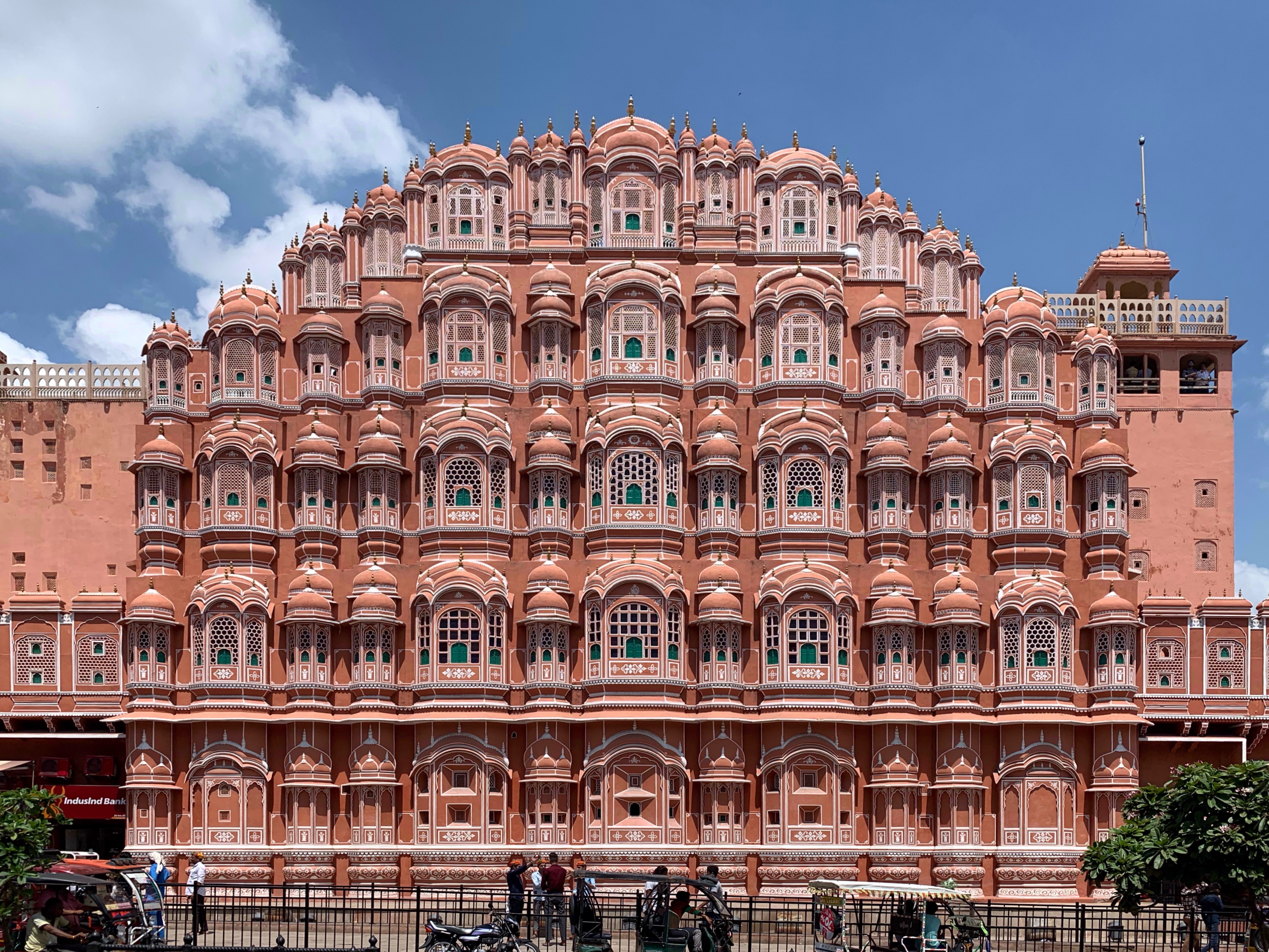
Jaipur Scams to Avoid in 2026 (India)
Jaipur's Pink City is famous for gem export scams, carpet shop commissions, and tuk-tuk drivers taking tourists to shops instead of requested destinations.
Risk Index
6.4
out of 10
Scams
12
documented
High Severity
0
0% of total
6.4
Risk Index
12
Scams
0
High Risk
Traveler Context
What Travellers Should Know About Scams in Jaipur
Jaipur carries 12 documented tourist scams in our database — none classified high severity, but the volume of medium-severity reports (11 of 12) reflects an active tourist-fraud environment that travellers should know in advance. Street-level scams accounts for the largest share (3 reports), led by Carpet and Textile Commission Steering: Tuk-tuk and auto-rickshaw drivers throughout Jaipur offer to take tourists to government-approved handicraft shops.
Specific documented risk areas include Auto-rickshaw and tuk-tuk pickup points near Jaipur Junction railway station, Sindhi Camp bus terminal, and major tourist sites including Amber Fort, Hawa Mahal, and City Palace; Jaipur Junction railway station main exit (platform 1 side) and Sindhi Camp bus stand, both primary arrival points for budget travellers; Near Hawa Mahal on Siredeori Bazaar, outside Jantar Mantar on Gangori Bazaar, and along the tourist approach roads to City Palace in the old city of Jaipur. A separate but related pattern is Fake Hotel and Guesthouse Redirect: When tourists arrive at Jaipur Junction railway station or by bus at Sindhi Camp, touts claiming to be representatives of legitimate hotels intercept them and insist their booked accommodation has "closed," "flooded," or "overbooked. The single most effective protection across these patterns: Research reputable fixed-price shops (such as the Rajasthan Government Emporium on MI Road) before your visit. Be firm with drivers upfront that you will not be making any shopping stops. Book rides via app to reduce commission steering.
Carpet and Textile Commission Steering
Tuk-tuk and auto-rickshaw drivers throughout Jaipur offer to take tourists to government-approved handicraft shops. These are private shops paying high commissions — the resulting prices are inflated by 200–400% to cover the referral fee. Drivers may refuse to take tourists to their actual desired destination until a shop visit is completed.
Auto-rickshaw and tuk-tuk pickup points near Jaipur Junction railway station, Sindhi Camp bus terminal, and major tourist sites including Amber Fort, Hawa Mahal, and City Palace
How to avoid: Research reputable fixed-price shops (such as the Rajasthan Government Emporium on MI Road) before your visit. Be firm with drivers upfront that you will not be making any shopping stops. Book rides via app to reduce commission steering.
Key Risk Areas
Where These Scams Are Most Active
Specific areas and landmarks with the highest concentration of documented incidents in Jaipur.
Carpet and Textile Commission Steering
Taxi & TransportAuto-rickshaw and tuk-tuk pickup points near Jaipur Junction railway station, Sindhi Camp bus terminal, and major tourist sites including Amber Fort, Hawa Mahal, and City Palace
Fake Hotel and Guesthouse Redirect
Accommodation ScamsJaipur Junction railway station main exit (platform 1 side) and Sindhi Camp bus stand, both primary arrival points for budget travellers
Gem Export Investment Scam
Street ScamsNear Hawa Mahal on Siredeori Bazaar, outside Jantar Mantar on Gangori Bazaar, and along the tourist approach roads to City Palace in the old city of Jaipur
Carpet and Textile Shop Commission Scam
Taxi & TransportTuk-tuk and auto-rickshaw stands at Jaipur Junction railway station, Amber Fort road, and the main tourist routes between the old city monuments; commission shops concentrated on Amber Road and near Sanganer
Currency Exchange and ATM Short-Change
Money & ATM ScamsJohari Bazaar (jewellery market street), MI Road near Panch Batti intersection, and Badi Chaupar roundabout in the walled city
Blue Pottery and Gem Shop Fake Goods
Other ScamsShops concentrated in and around Johari Bazaar, Bapu Bazaar, and the lanes near Hawa Mahal in Jaipur's old city; also tourist-facing outlets near Amber Fort on Amber Road
Safety Checklist
Quick Safety Tips for Jaipur
Key precautions based on the most frequently reported scams here.
- Research reputable fixed-price shops (such as the Rajasthan Government Emporium on MI Road) before your visit. Be firm with drivers upfront that you will not be making any shopping stops. Book rides via app to reduce commission steering.
- Confirm your booking directly with your hotel before arriving and ask for a pick-up at the station if possible. Ignore all unsolicited approaches inside the station concourse and verify closure claims by calling your hotel directly before agreeing to go anywhere else.
- Never accept gem investment proposals from strangers, no matter how convincing the story. Genuine investment-grade gemstones are not sold on street referrals. If buying jewellery as a keepsake, use established certified shops with return policies.
- Shop at the Government Rajasthan Emporium (Rajasthali) on M.I. Road for fair fixed prices. Refuse any driver's recommendation for shops. If you want to browse, walk to shops yourself rather than being driven.
- Use only bank ATMs inside the main bank branches on MI Road or inside shopping centres, and shield your PIN from all bystanders. Decline all offers of help at ATMs. For currency exchange, count every note yourself before leaving the counter and use only RBI-licensed bureaux with a displayed rate board.
FAQ
Jaipur Safety — Frequently Asked Questions
What scams target tourists in Jaipur?
Are taxis safe in Jaipur?
Is Jaipur safe at night for tourists?
Which areas of Jaipur should tourists be most careful in?
How can I avoid being scammed in Jaipur?
Jaipur · India · South Asia
Open in Maps →0
High Risk
11
Medium Risk
1
Low Risk
12
Total
Showing 12 scams · sorted by frequency
Click any card to expand
Browse by Type
Scam Types in Jaipur
Filter by category — or read worldwide guides for each scam type including taxi scams, street scams, and more.
Taxi & Transport
2 scamsCarpet and Textile Commission Steering
Carpet and Textile Shop Commission Scam
Street Scams
3 scamsGem Export Investment Scam
Fake Government Handicraft Store
Holy Man Tikka Blessing Fee
Restaurant Scams
1 scamsRooftop Restaurant Overpricing and Menu Switch
Tour & Activities
3 scamsElephant Ride Welfare and Overcharge
Elephant Ride Welfare and Overcharge Scam
City Palace Photography Upcharge
Compare with nearby destinations
Nearby
More destinations in India
Editorial note: Scam warnings for Jaipur are compiled from government travel advisories (US State Dept, UK FCDO, Australian DFAT), verified news sources, travel community reports, and traveler-submitted incidents. All entries are reviewed for accuracy and local specificity before publication. Read our full methodology →